For decades, design thinking has been packaged and exported as a Western innovation methodology, refined in institutions like Stanford, popularized by global consultancies, and embedded into corporate strategy decks around the world.
It is often introduced in Africa as something new. Something modern. Something we must learn.
But what if we’ve had it all along?
What if design thinking is fundamentally African?
This is not a rhetorical flourish. It is a serious reframing of how innovation on this continent should be understood. Long before the terminology existed, long before “innovation labs” and “human-centered workshops,” African communities were practicing design in its purest form, solving real problems for real people within real constraints.
At MADE by People, we believe that everyday African makers are innate designers. The task before us is not to import creativity, but to recognize it, refine it, and scale it.
Design Without the Name
In many African cities and rural communities, problem-solving is not a structured workshop. It is a lived necessity.
Consider the fundi who modifies a machine part because the original component is unavailable. Or the market trader who reorganizes her stall after noticing how customers move through space. Or the farmer who shifts planting cycles based on rainfall patterns learned over generations. Or the transport operator who adjusts routes daily to accommodate traffic, weather, and demand.
None of these individuals describe what they are doing as “design thinking.” Yet each of them is observing human behavior, responding to constraints, testing small adjustments, and refining solutions through feedback.
This is design in its most honest form.
Design thinking, stripped of jargon, is about understanding people deeply and building solutions that fit their reality. African communities have always operated this way because they have had to. When infrastructure is unreliable, systems informal, and resources limited, survival demands adaptive creativity.
Constraint is not a limitation here. It is a catalyst.
Innovation Rooted in Community
Modern design frameworks often emphasize empathy as the first step. Teams are taught to interview users, map journeys, and uncover unmet needs.
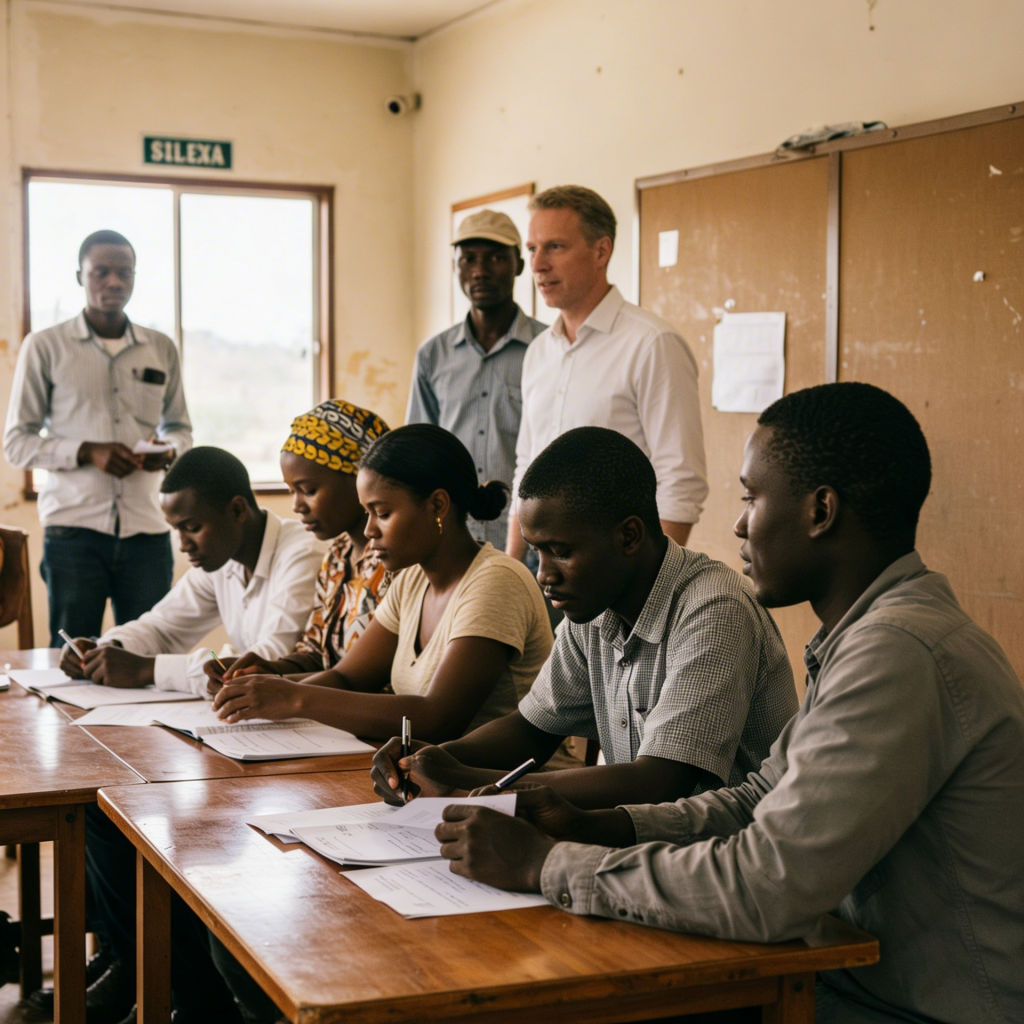
But African societies have long been structured around communal awareness. In traditional settings, decisions affecting the group were discussed collectively. Elders listened. Stories were shared. Consensus emerged. Solutions were implemented in ways that reflected collective ownership.
When a water source dried up, it was not a consultant who arrived with a prepackaged solution. The community gathered. Experiences were compared. Causes were debated. A small intervention was attempted. If it worked, it spread. If it failed, it was adjusted.
That cycle — listening, defining, testing, refining — mirrors what design thinking textbooks now teach.
Community-based design solves urban problems precisely because it does not start with abstraction. It starts with lived experience. In rapidly growing African cities like Nairobi, Lagos, and Addis Ababa, many top-down planning efforts struggle because they overlook informal systems that already function effectively.
Informal transport networks move millions daily. Market ecosystems distribute food efficiently. Community savings groups provide financial resilience. These are not chaotic structures; they are adaptive designs.
When development efforts ignore these organic systems, they fail. When they build upon them, they succeed.
The Misconception of Imported Innovation
One of the quiet dangers of importing innovation frameworks wholesale is that it subtly communicates that creativity comes from elsewhere. That rigor must be borrowed. That structure belongs to someone else.
This narrative is not only inaccurate — it is limiting.
Africa’s challenge has never been a lack of ingenuity. It has been a lack of scaffolding to scale that ingenuity consistently and sustainably. Informal brilliance often remains localized because it is undocumented, underfunded, or unsupported by systems that allow replication.
The real opportunity is not to teach Africa how to design. It is to provide language, process, and infrastructure that elevate what already exists.
When we understand that design thinking is fundamentally African, the role of a design firm shifts dramatically. We are no longer introducers of foreign ideas. We become translators of lived intelligence into scalable systems.
From Lived Intelligence to Structured Impact.
Across the continent, informal systems already operate as prototypes of scalable models.
Chamas function as decentralized financial systems built on trust and collective governance. Informal logistics networks coordinate delivery across complex terrain without centralized software. Market cooperatives manage supply chains through relationships rather than spreadsheets.
These are not primitive versions of Western systems. They are context-optimized solutions.
The role of structured design thinking is to help such systems become more resilient, more visible, and more transferable. It introduces documentation where there was memory. It introduces iteration cycles where there was instinct. It introduces tools that help scale without erasing the human core.
At MADE by People, this is where we operate. We work at the intersection of the African context and structured product development. The future of innovation on this continent will not come from copying Silicon Valley, but from refining the intelligence embedded in our markets, farms, classrooms, and communities.
Why This Matters Now
Africa is urbanizing rapidly. Its population is young. Its economies are digitizing. Technology adoption is accelerating across sectors from agriculture to finance to education.
In this moment, the question is not whether innovation will happen. It is whose logic will guide it.
If solutions continue to be imposed without community grounding, they will remain fragile. If digital platforms are built without understanding informal behavior patterns, they will struggle to gain adoption. If products ignore local nuance, they will solve theoretical problems rather than lived ones.
But if we begin from the premise that African communities already understand their realities deeply, and that design thinking is embedded within their everyday problem-solving, then innovation becomes a process of amplification rather than imposition.
It becomes collaborative rather than corrective.
Reclaiming the Narrative
Reclaiming the idea that design thinking is fundamentally African is not about pride for its own sake. It is about accuracy. It is about recognizing intellectual heritage. It is about shifting from dependency to agency.
When African founders, policymakers, and organizations internalize this truth, their posture changes. They stop asking how to adapt foreign models and start asking how to strengthen local ones. They move from imitation to articulation.
And when that happens, something powerful emerges.
Innovation becomes culturally fluent.
Products feel intuitive.
Communities participate.
Solutions endure.
The world often speaks about Africa as an emerging market. But in many ways, Africa has always been an emerging laboratory of human-centered resilience.
Perhaps the future of global design will not be exported into Africa.
Perhaps it will be refined here and exported outward.